
Understanding Masking: Why Your Child May Be Exhausted at the End of the Day
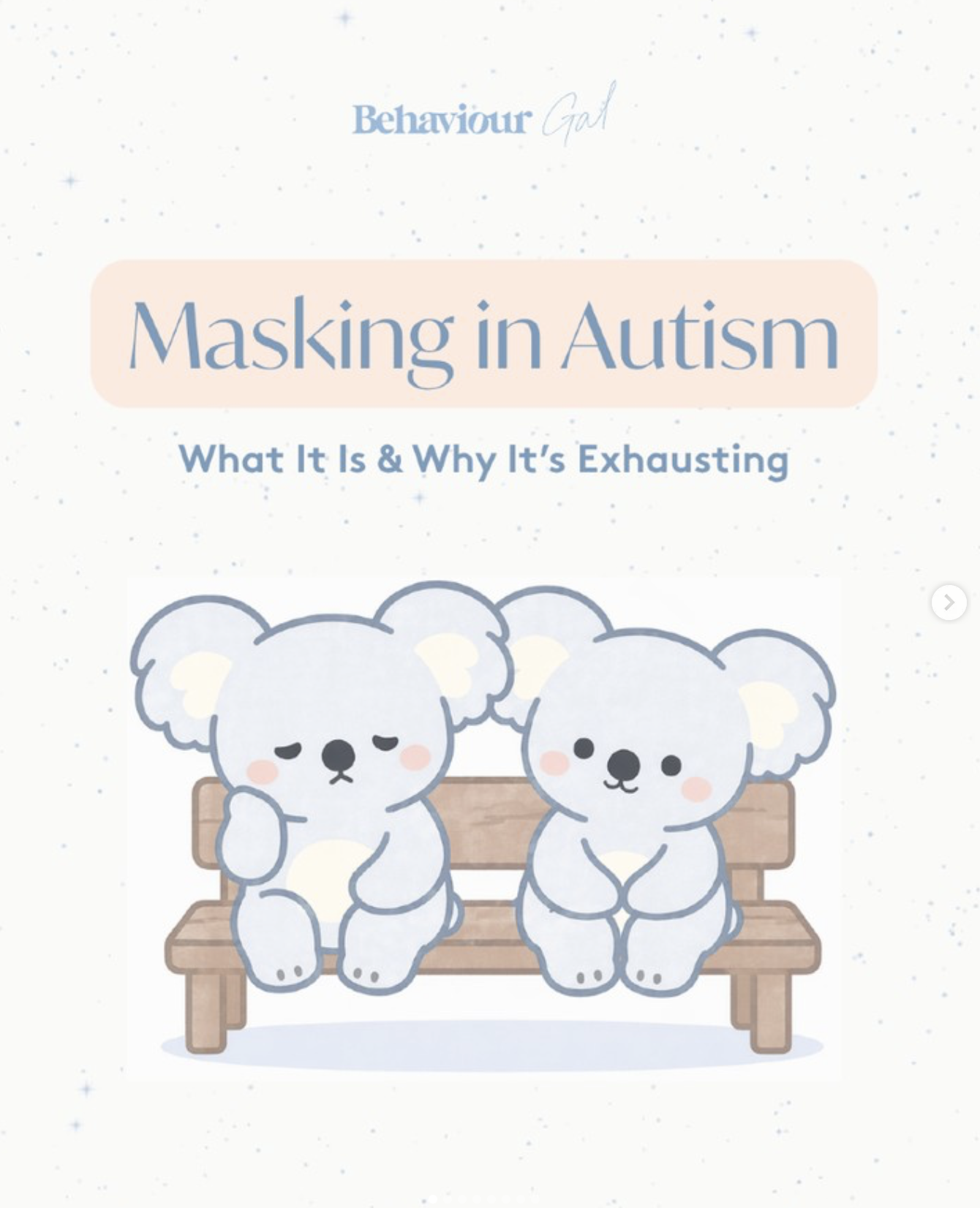
Masking takes more out of kids than we often realize.
For many neurodivergent children, getting through the day means constantly adjusting, holding things in, and trying to meet expectations that do not always feel natural. This is what is known as masking.
What Is Masking?
Masking happens when a child suppresses or hides their natural responses, movements, or reactions in order to fit into an environment. It might look like sitting still when their body wants to move, staying quiet when they are overwhelmed, or forcing eye contact that feels uncomfortable. The National Autistic Society describes masking as a strategy many autistic and neurodivergent people use to appear less different in social situations (National Autistic Society). From the outside, masking can look like coping. In reality, it is hard work.
The Hidden Cost of "Doing Great"
Masking can help a child get through certain environments, and it can lead to reports like "they are doing great." But that assessment often misses what is happening underneath. Masking usually comes at a real cost to the child.
Holding it together all day is exhausting. It takes constant effort, awareness, and self-monitoring, often without the child even realizing they are doing it. Clinical researchers have linked sustained masking to emotional depletion and, in some cases, autistic burnout (Sensory Integration Education). That effort adds up.
Why Home Becomes the Release Valve
This is why home is so often where everything finally comes out. After a full day of masking at school or in other settings, kids need somewhere safe to let go. Big emotions, meltdowns, or shutdowns at home are not a sign that something is going wrong. Clinicians note that children often mask successfully in demanding environments like school, only to reach a point at home where the accumulated stress overwhelms their capacity to hold it together any longer (Sensory Integration Education). This is often a sign that your child trusts home enough to stop masking, not a sign that something is going wrong.
Why This Understanding Matters
Recognizing masking can shift how we support neurodivergent kids in a few important ways:
It helps us advocate for them in spaces that need to change, rather than expecting the child to keep adapting on their own.
It moves everyone in their world, including parents, teachers, and caregivers, toward genuine acceptance of who they are.
It shifts the focus away from how well a child can blend in and toward how well they are actually supported.
Kids should not have to earn understanding by performing well enough to hide their needs.
If This Resonates With You
If this sounds familiar, you are not alone. Many families are navigating exactly this, often without realizing there is a name for what their child is experiencing.
We work with families across the Lower Mainland and surrounding communities, and we also offer virtual support. You can learn more through the link in our bio.
References
Sensory Integration Education. Masking in Neurodivergent Children and Young People: The Impact on Mental Health and Externalising Behaviour
National Autistic Society. Masking
Further reading: Hull, L., et al. (2019). Development and Validation of the Camouflaging Autistic Traits Questionnaire (CAT-Q). Journal of Autism and Developmental Disorders, 49, 819-833.